Roller Crimper for Tractor: Choosing the Right Model for Your Farm
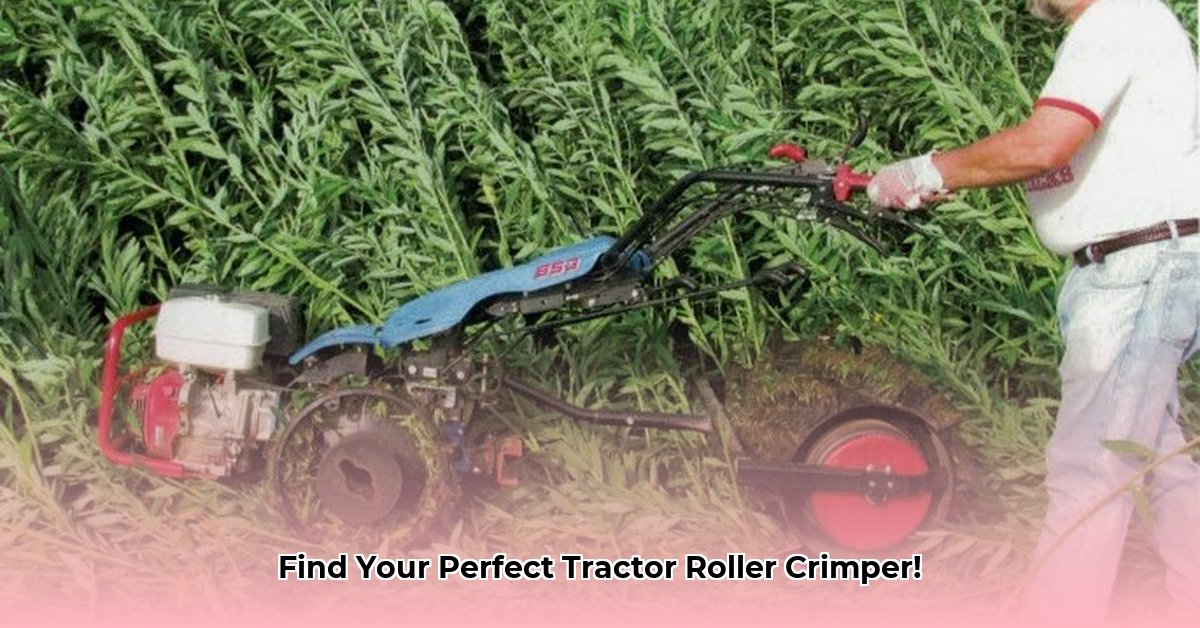
Selecting the ideal roller crimper for your tractor requires careful consideration of several factors. This guide compares two leading brands, Patriot and PalletFork, to help you make an informed decision. Both utilize a standard three-point hitch system, and both employ curved blades arranged in a chevron pattern for even crimping. However, key differences in features, specifications, and overall approach to regenerative agriculture set them apart. For more options, check out these other pull-behind crimpers.
Patriot vs. PalletFork: A Comparative Review
The Patriot and PalletFork roller crimpers share some similarities, such as their use of a three-point hitch and chevron-patterned blades which prevent bouncing and ensure consistent crimping. However, their strengths lie in different areas.
The Patriot line excels in its versatility and comprehensive specifications. Patriot offers a wider array of models, catering to farms of all sizes and various cover crop types. Their website provides detailed weight specifications for each model, aiding in planning and budget allocation. This detailed information allows precise control over crimping pressure, crucial for optimal results.
"The Patriot's detailed weight and model specifications make it far easier to match the crimper to specific needs," says Dr. Emily Carter, Agricultural Engineer at Purdue University.
In contrast, PalletFork emphasizes environmentally friendly practices and long-term soil health benefits. Their marketing strongly highlights regenerative agriculture, appealing to environmentally conscious farmers. While PalletFork specifies maximum water capacity for added weight, precise resulting crimping pressure information is less readily available. This might require more experimentation to fine-tune settings for optimal performance.
Crimping Pressure: Finding the Sweet Spot
Achieving the correct crimping pressure is paramount for effective cover crop termination. Insufficient pressure might lead to incomplete termination, while excessive pressure could damage the soil. Patriot's precise weight recommendations simplify achieving optimal pressure. PalletFork's less detailed guidance might necessitate more trial and error. The level of desired precision and your tolerance for experimentation should influence your choice.
Matching the Crimper to Your Farm's Specific Needs
Before selecting a crimper, consider these key questions:
- Farm Size and Cover Crop Types: Do you need a highly versatile model to handle varying acreage and diverse crops, or will a more specialized model suffice?
- Budget: Compare the price points of different models within each brand's range.
- Priority Focus: Do you prioritize precise control over crimping pressure and easy operation, or does the environmental impact and promotion of regenerative agriculture take precedence?
The best crimper should align with your farm's unique needs and operational goals.
Actionable Steps for Choosing Your Roller Crimper
- Assess your farm's needs: Consider acreage, cover crop types, budget, and terrain.
- Compare specifications: Analyze the working width, weight capacity, and blade design of both brands.
- Seek peer input: Consult online reviews and talk to other farmers in your area for firsthand experience.
- Consult experts: Seek guidance from agricultural equipment dealers or consultants.
- Make an informed decision: Combine research with expert advice to select the most suitable model.
Long-Term Investment and Future Trends
Roller crimpers represent a long-term investment. Regular maintenance, particularly blade sharpening, is essential for sustained efficiency and lifespan. Durable construction and high-quality materials are crucial. Efficient cover crop management improves soil health, benefiting yield and reducing fertilizer costs. Furthermore, the growing focus on regenerative agriculture indicates increased future demand for this technology.
Potential Issues and Mitigation Strategies
| Potential Issue | Likelihood | Impact on Operation | Mitigation Strategy |
|---|---|---|---|
| Hitch System Failure | Uncommon | Significant downtime | Regular inspection & maintenance; proper hitch setup |
| Blade Wear & Tear | Moderate | Reduced efficiency; uneven crimping | Regular sharpening; careful operation |
| Uneven Weight Distribution | Low | Uneven crimping; potential damage | Careful filling and distribution of added weights |
| Structural Damage | Low | Major failure | Regular visual inspection; avoid overloading; choose robust model |
This guide provides a framework for making an informed decision. Individual farm needs vary significantly; further research is highly recommended.
Additional Considerations: Soil Health and Cover Crop Management
Choosing the best cover crop roller crimper significantly impacts soil health. Factors such as roller width, weight, and roller design influence effectiveness, impacting weed suppression, soil structure, and water infiltration. The selection of cover crops like cereal rye also plays a key role, with higher biomass rates generally improving weed control but increasing the likelihood of lodging. Careful planning, including selecting appropriate cover crops and crimping at the optimal time, is crucial. Addressing potential challenges such as lodging and managing costs can ensure successful implementation and optimized outcomes.